

Caitlin Rourk for Congress
July 24, 2026 · Newsletter
The Radical Act of Listening
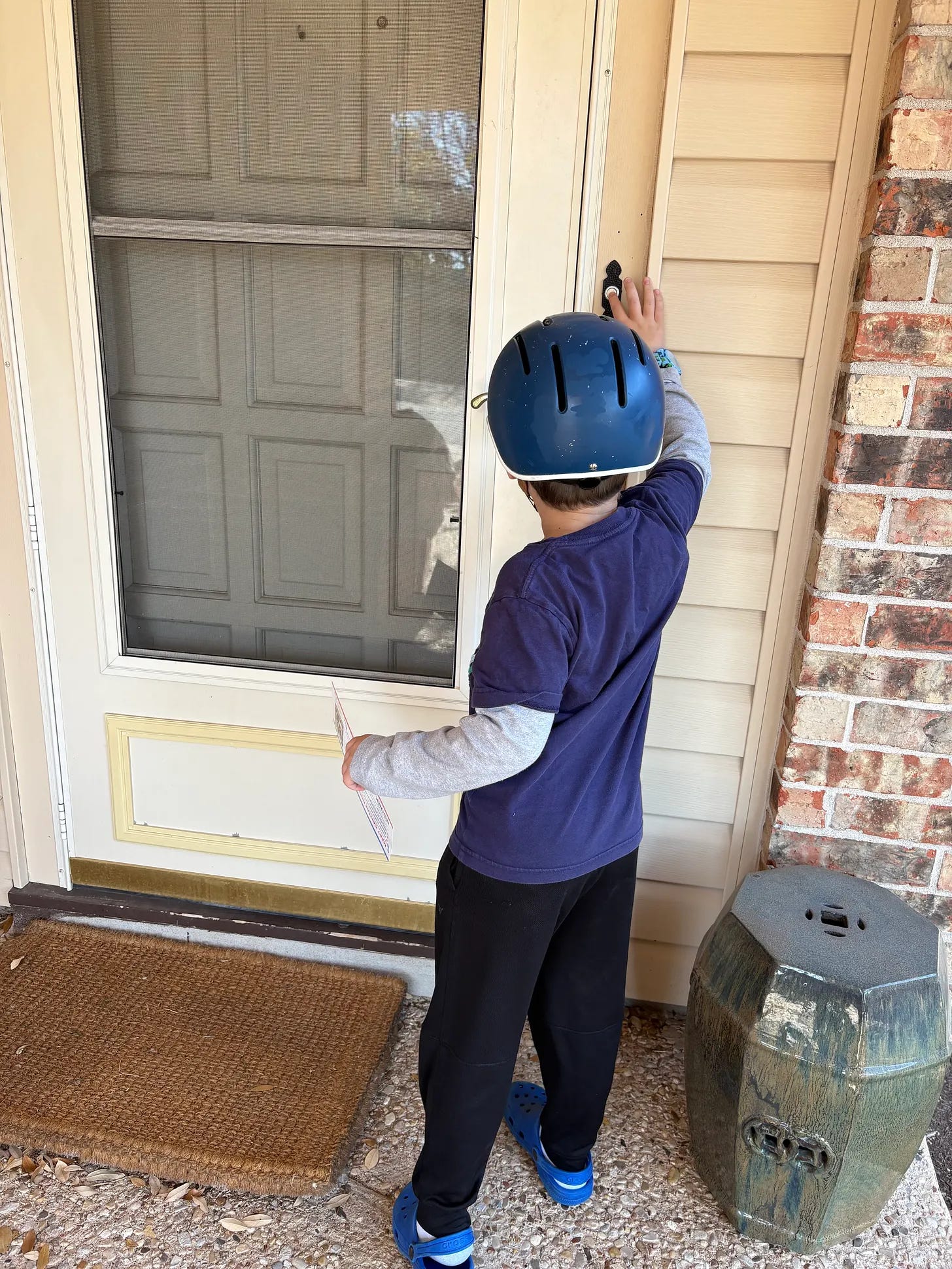
One of the things I’m proudest of this summer isn’t just how many doors our team is knocking.
It’s how we’re knocking them.
We’ve trained dozens of students and volunteers in “deep canvassing,” an approach to voter outreach built on the idea that if you want to represent people, you should spend more time understanding them than talking at them.
In today’s political environment, it feels almost radical.
Politics in 2026 rewards the fastest comeback on social media and the sound bite most likely to go viral. We spend so much time trying to persuade people that we’ve almost forgotten how to understand them.
Deep canvassing asks us to do the opposite. Instead of showing up with a script and trying to convince someone, we start with questions.
What’s been on your mind?
What’s worrying you?
What do you wish people in Washington understood about your community?
Then we listen. Like, actually listen. Not the kind of listening that happens in a focus group or through a poll. We listen like neighbors. Like people willing to stand on a stranger’s doorstep in the blazing Texas heat because we believe they’re worth hearing from. And maybe that’s why our approach feels so different.
I’m not one for vanity metrics and performative politics, if that wasn’t already clear. Too much of our political conversation has become about appearances - the viral moment, the perfect clip, the number we can put on a graphic - rather than whether we’re actually building relationships with the people we hope to serve.
Some of our volunteers knock on the door of someone who tells them within the first thirty seconds that they can’t stand Democrats.
In many campaigns, that’s the end of the conversation. For us, it’s often the beginning. We ask why. Sometimes the answer has nothing to do with ideology. Sometimes it’s that they feel the Democratic Party has stopped speaking to their priorities. Sometimes it’s years of financial stress, health challenges, or simply the feeling that no one in politics is paying attention to people like them.
Sometimes we leave having changed no one’s vote. And that’s okay. Not every conversation is supposed to end in agreement. But every conversation has the potential to leave someone feeling heard, and as a candidate, every conversation is a window into the real-life stakes of decisions I’ll be charged to make in Washington. I think we’ve underestimated how much that matters.
Early in my career, I worked with communities in Appalachian coal country. I learned pretty quickly that conversations about environmental policy and regulations weren’t really about coal. They were about identity. About pride. About family. About the fear that an entire way of life - their heritage - was disappearing while people in Washington argued about them instead of with them.
When we built our field program, that experience shaped the way we approach every conversation. You can’t understand people by reducing them to their politics. You have to hear their story first.
People ask me all the time how to get young people more engaged in politics because they see the students working their butts off on this campaign. Watching our fellows this summer, I think we’re asking the wrong question.
Instead of asking how to get young people involved, maybe we should ask what kind of politics we’ve invited them into. One built on outrage, dunking on people online, and treating every disagreement like a moral failing? Or one rooted in curiosity, humility, and the belief that our neighbors are worth listening to, even when we don’t agree?
I don’t think democracy weakens because people disagree. I think it weakens when we stop seeing the human being behind the opinion.
Our politics could use more humility. More listening. More willingness to sit with people whose experiences are different from our own.
These students give me hope because they’re choosing the harder path. They’re willing to knock on a stranger’s door, ask a sincere question, and stay long enough to hear the answer. That takes courage.
That’s the kind of future we’re trying to build.