

Caitlin Rourk for Congress
September 20, 2026 · Newsletter
When We Ask Them to Say “Send Me”
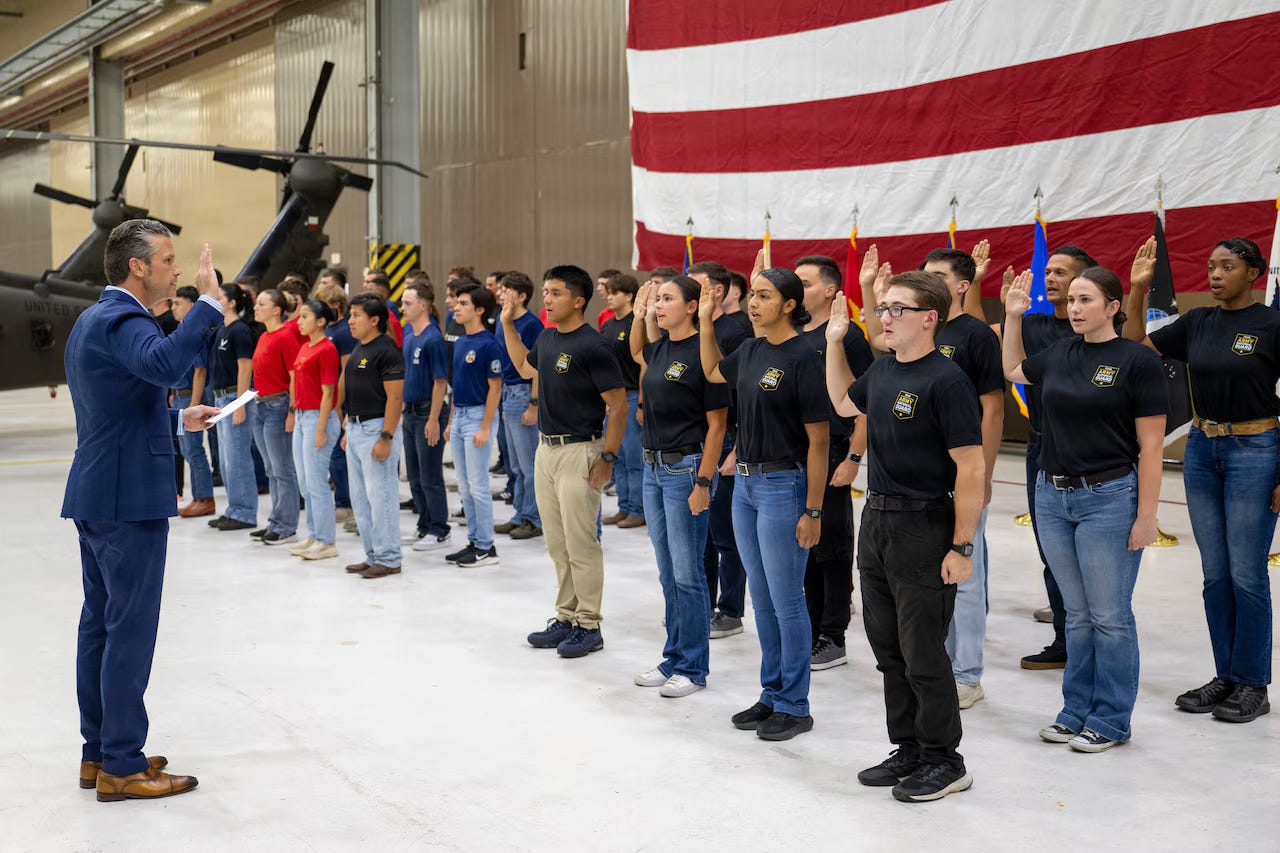
This weekend, Secretary of Defense Pete Hegseth came to Congressional District 10 for a series of visits. It wasn’t surprising considering our district sits at the intersection of defense innovation and military service.
Secretary Hegseth saw the remarkable work happening at Saronic Technologies, visited new enlistees at the Austin Armed Forces Reserve Center, my home base for years in both the Texas Army National Guard and U.S. Army Reserve, and spent time with the storied Corps of Cadets at Texas A&M.
Whatever one’s politics, having the Secretary of Defense show up when you’re preparing for military service is a big deal. Our senior leaders should spend more time with the young men and women who may someday be asked to carry out the decisions they make.
When I heard about Secretary Hegseth’s visit, I hoped it might also bring some real answers about the war with Iran that I hear people across our district asking for.
Instead, we got speeches, photographs and slick, high-production videos. We heard a lot about strength, readiness, and how he and President Trump have our troops’ backs. But on the questions that still demand answers, like what exactly we’re trying to accomplish, what conditions would bring the hostilities to an end, and when our troops come home, we got more messaging than clarity.
The frustration I hear over Iran isn’t necessarily rooted in opposition to using military force. People are asking more fundamental questions: What are we trying to accomplish? What does success look like? How does this end? Those questions aren’t far from the standard Secretary Hegseth himself laid out during his visit.
At Texas A&M, he told future officers that his job is to give them the weapons, training, technology, and “mission clarity” they need to fight, win, and come home.
The day before, speaking to the parents of new enlistees in Austin, he described their sons and daughters as an extraordinary gift to the country - one the military must not squander - and promised that the missions they receive would be clear.
I couldn’t agree more, and it’s precisely why the unanswered questions about Iran matter so much. The costs are becoming staggering. U.S. Central Command estimates the war has already cost American taxpayers at least $43.6 billion through September 3, including $28 billion in munitions alone, with billions more being spent each month. At the same time, disruptions to global energy markets are driving up costs for American families and businesses. But the greatest cost of war has never been measured in dollars. It’s measured in the lives of the men and women we ask to fight it and by the families who wait for them to come home.
Secretary Hegseth has called this the “Send Me” tour, invoking Isaiah 6:8:
“Here am I. Send me.”
It’s a beautiful verse. I understand why it resonates with people willing to put on the uniform, and I’ve certainly felt that same call in my own service. Isaiah’s words capture something powerful about selfless service: a willingness to step forward without knowing exactly what will be asked of you.
Our service members make that kind of extraordinary commitment. They raise their right hands knowing they won’t be able to choose every mission or know every danger ahead. Their willingness to serve, however, doesn’t lessen the responsibility of the people who send them. It makes that responsibility greater.
When a young American says, “Send me,” our political leaders still have to answer: Where? Why? For what objective? Under what authority? Until when?
That’s why another part of Secretary Hegseth’s remarks at Texas A&M deserves attention. Moments after promising cadets “mission clarity,” he declared that “silly rules of engagement are gone” and that “warfighters are unleashed.” Removing unnecessary restrictions is one thing, but rules governing the use of force exist for a reason. During an ongoing war, dismissing them as “silly” before a new generation of military leaders is deeply troubling, especially when the broader mission itself remains unclear to the American people.
We’ve learned the cost of failing to answer questions like those I’ve outlined. Five years after the fall of Kabul and the U.S. withdrawal from Afghanistan, I still hear anger about it. Some of that is about the withdrawal itself and the lives lost at Abbey Gate, but underneath it is something deeper. After 20 years of sacrifice, many veterans and military families never felt that our leaders reckoned honestly enough with what went wrong.
The power to send Americans into harm’s way demands extraordinary seriousness from those who wield it: clear missions, defined objectives, honest assessments when things go wrong, and accountability from the people making the decisions.
Having our service members’ backs means more than standing beside them for photographs and a PT session. It means being able to look them - and their families - in the eye and explain what we’re asking them to risk their lives for, what success looks like, and how we will bring them home.
Secretary Hegseth’s visit has ended, and the cameras have already moved on. The Texans who raised their hands to serve during his visit will live with the decisions made long after. If we’re going to ask them to say “Send me,” we owe them an honest answer about where, why, and how we intend to bring them home.